
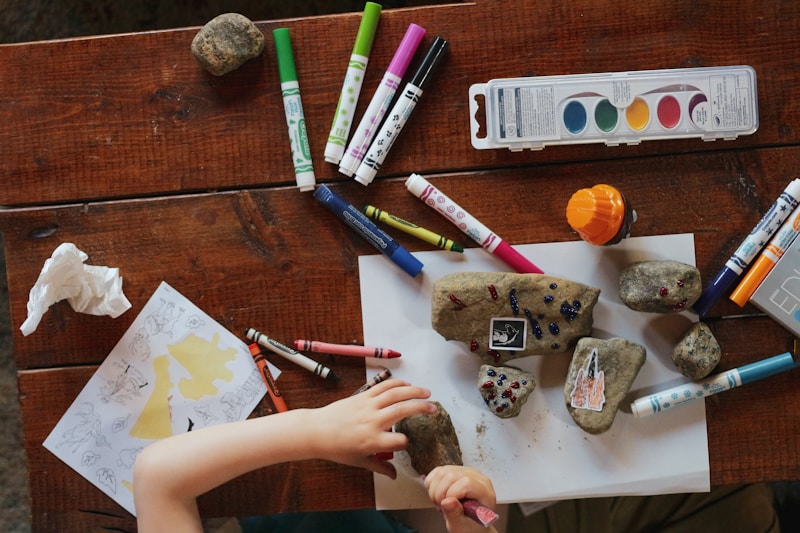
Play Is Serious Business
I used to think play was just something kids did to burn off energy while I caught up on chores. Then I read the research on brain development through play, and wow, was I wrong. Play isn't just important for brain development. It's arguably the most important thing kids can do.
When kids play, they're not just having fun (though that matters too). They're building neural connections, developing problem-solving skills, practicing social interaction, and learning to regulate their emotions. It's like a full-body workout for the brain.
Why Play Works So Well
The magic of play is that it's intrinsically motivating. Kids don't play because someone told them to. They play because it feels good, because they're curious, because they want to explore. And that intrinsic motivation is the perfect state for learning.
When kids are engaged in play, their brains release dopamine, a neurotransmitter associated with pleasure and learning. This creates a positive feedback loop where play feels good, which makes kids want to play more, which helps their brains grow even more. It's a beautiful cycle.
Types of Play That Boost Brain Development
Not all play is created equal when it comes to brain development. Some types of play are particularly powerful for building specific skills. Let's break down the most beneficial types.
Pretend Play and Imagination
Pretend play, also called dramatic or imaginative play, is incredibly powerful for brain development. When kids pretend to be doctors, superheroes, or teachers, they're developing abstract thinking, language skills, and emotional understanding. They're literally trying on different perspectives and practicing how the world works. You might also like this related article.
Construction Play
Building with blocks, LEGOs, or other construction materials is fantastic for spatial reasoning, problem-solving, and planning. Kids learn about balance, symmetry, cause and effect, and engineering principles through trial and error. And the best part is that failing is just part of the process.
Outdoor Play: Nature's Brain Gym
There's something special about playing outside that indoor play just can't match. The outdoors provides sensory experiences that indoor environments can't replicate. The feel of grass, the smell of rain, the sound of birds, the sight of clouds all stimulate the brain in unique ways.
Research shows that kids who spend more time outdoors have better attention spans, lower stress levels, and improved cognitive function. Nature is like a reset button for the brain. So send them outside. Let them get dirty. Their brains will thank you.
Free Play vs. Structured Activities
There's a debate in the parenting world about free play versus structured activities. Both have their place, but for brain development, free play is king. When kids direct their own play, they're developing executive function skills like planning, decision-making, and self-regulation.
This doesn't mean structured activities are bad. Soccer practice, dance class, and art lessons all have value. But make sure your kids have plenty of unstructured time to just play. Not every moment needs to be scheduled. You might also like our guide on this topic.
How to Encourage Brain-Boosting Play
As parents, we can create environments that encourage brain-boosting play without over-directing it. Here are some practical ideas that have worked well in our family.
Provide Open-Ended Materials
Give kids materials that can be used in multiple ways. Blocks, art supplies, fabric, cardboard boxes, and natural materials like sticks and stones are perfect. The simpler the toy, the more creative the play. A cardboard box can be anything from a rocket ship to a castle.
Play Together (Sometimes)
Playing alongside your kids is one of the best ways to strengthen your relationship and support their development. But here's the key: follow their lead. Let them direct the play. Your role is to be a supportive participant, not the director.
When you play with your kids, you're modeling problem-solving, language, and social skills. You're also showing them that play is valuable and worth your time. That message is powerful.
The Role of Risk in Play
I know it's scary, but some degree of risk-taking is actually good for brain development. Climbing trees, jumping off low walls, and wrestling with friends all provide opportunities for kids to assess risk, build confidence, and learn their limits. You might also like more tips here.
Research continues to show that the early years of a child's life are critical for establishing patterns that last a lifetime. The neural pathways being formed right now will serve as the foundation for all future learning, behavior, and health. This isn't meant to pressure you. It's meant to empower you. Every positive choice you make today is an investment in your child's future. And the beautiful thing is that children are incredibly resilient and adaptive. Even small changes can yield remarkable results over time.Finally, remember to take care of yourself throughout this process. Parenting is exhausting, demanding, and sometimes overwhelming. You can't pour from an empty cup. Make time for rest, hobbies, and activities that recharge you. When you're well-rested and mentally healthy, you're a better parent. Your child doesn't need a perfect parent. They need a present, engaged, and emotionally available one. And that starts with taking care of yourself.
This doesn't mean we should let our kids do dangerous things. But we need to resist the urge to eliminate all risk from their lives. A kid who never takes risks never learns to manage them. And risk management is a crucial life skill.
Music and Movement Play
Singing, dancing, and playing instruments are fantastic for brain development. Music engages multiple brain areas simultaneously, including those responsible for language, memory, and motor skills. It's like a brain superfood.
Don't worry if you can't carry a tune. Your kids don't care. They just want to make music with you. Put on some tunes, dance around the kitchen, sing in the car. It's all good for their brains.
Games with Rules
As kids get older, games with rules become increasingly important for brain development. Board games, card games, and sports teach kids to follow rules, take turns, handle winning and losing, and think strategically. These are all valuable cognitive skills.
Start with simple games for younger kids and gradually increase complexity as they get older. Even young toddlers can play simple games like roll the ball or peekaboo. The important thing is that they're learning to follow a structure. You might also like check out this post.
Sensory Play: Touch, Feel, Explore
Sensory play involves any activity that stimulates the senses. Playing with sand, water, playdough, or rice bins all fall into this category. Sensory play is calming, engaging, and wonderful for brain development.
Younger kids, in particular, benefit from sensory experiences. They learn about the world through their senses, and providing rich sensory input helps their brains make sense of all that information. Plus, it's fun. And fun is the point.
Screen-Free Play Time
In our increasingly digital world, making time for screen-free play is more important than ever. Screens aren't inherently bad, but they can't replace the hands-on, immersive experiences that real-world play provides.
Try setting aside dedicated screen-free time each day for play. It might be after school, before dinner, or on weekends. Whatever works for your family. The important thing is that kids have opportunities to play without digital distractions.
Play Isn't Just for Kids
Here's a thought: play isn't just for kids. Adults benefit from play too. When you play with your children, you're not just supporting their development. You're also reducing your own stress, strengthening your relationship, and giving your brain a workout.
So put down the phone, get on the floor, and play. Build a fort, have a pillow fight, play hide and seek. Your kids will remember these moments forever, and your brain will be better for it too. Play is a win-win for everyone involved.