
Balancing Both Sides
When people talk about brain development, they often focus on making children smarter. But whole brain development isn't just about intelligence. It's about balance.
The Two Hemispheres
Your brain has two halves, each with distinct strengths. The left hemisphere excels at logic, language, and sequential processing. The right hemisphere excels at creativity, emotion, and holistic thinking.
Neither side is better than the other. Both are essential for optimal functioning. Whole brain development means nurturing both equally.
Why Balance Matters
A child who develops only left brain skills might be academically successful but lack creativity and emotional intelligence. A child who develops only right brain skills might be creative but struggle with analytical tasks.
Whole brain development creates well-rounded individuals who can think logically AND creatively, analyze AND imagine, plan AND improvise.
The Connection Between Hemispheres
The corpus callosum connects the two hemispheres, allowing them to communicate. Whole brain development strengthens this connection, enabling better integration of different types of thinking.
This integration is what produces truly innovative thinking. It's the ability to combine logic with creativity, analysis with intuition.
How to Achieve Whole Brain Development
The key is variety. Expose your children to diverse activities that challenge different parts of their brain. Math puzzles develop left brain skills. Art projects develop right brain skills. Building projects engage both simultaneously.
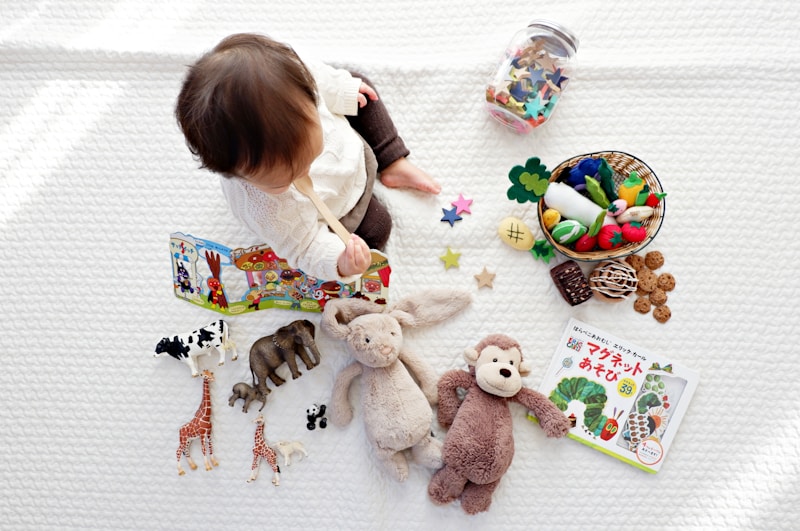
Create an environment that offers this balance naturally. Stock your home with both analytical toys, like puzzles and building sets, and creative toys, like art supplies and dress-up clothes.
The Role of Play
Play is the natural vehicle for whole brain development. During play, children naturally engage both hemispheres. Building a block tower requires spatial reasoning, right brain, and logical planning, left brain.
Encourage varied play experiences. Don't let your child get stuck in one type of play. Offer options that challenge different skills.
Age Considerations
Young children naturally lean toward right brain processing. This is normal and healthy. Don't try to force left brain skills too early. Instead, support their natural right brain development while gently introducing left brain activities.
As children grow, gradually increase left brain challenges. By school age, a balanced approach serves them best.
The Long Game
Whole brain development isn't a short-term project. It's a lifelong process. The foundations you build in early childhood continue to develop throughout life. Give your children the gift of balance, and they'll thank you for it.